




The Mazda MX‑5 is renowned for its precise, engaging manual gearbox, but like any hydraulic system, the clutch relies on a small network of components that wear out over time. If your pedal feels soft, your gear changes are notchy, or you’re struggling to select gears cleanly, there’s a good chance your clutch hydraulics need attention.
In the UK, where moisture, road salt and seasonal temperature swings all play a role, ageing clutch components are a common issue across all generations of MX‑5. The good news? A full refresh of the master cylinder, slave cylinder and hose is a relatively straightforward and cost‑effective way to restore crisp clutch feel and reliability.
In this guide, we’ll explain how the system works, common failure symptoms, and why a preventative refresh is one of the best upgrades you can make.
How MX‑5 Clutch Hydraulics Work
The clutch system in all MX‑5 models (Mk1–Mk4) uses a hydraulic setup rather than a cable.
When you press the clutch pedal:
- The master cylinder converts pedal movement into hydraulic pressure
- Fluid travels through the clutch hose/line
- The slave cylinder receives that pressure and moves the clutch fork
- The clutch disengages, allowing smooth gear changes
Simple, effective, but reliant on seals, fluid and pressure all working perfectly.
Common Symptoms of Failing Clutch Hydraulics
If you’re experiencing any of the following, your hydraulics are likely due a refresh:
- Spongy or soft clutch pedal
- Pedal sticking or slow to return
- Difficulty selecting gears (especially reverse or first)
- Clutch biting point changing unpredictably
- Visible fluid leaks near the slave cylinder or firewall
Often, these issues creep in gradually, making them easy to overlook until the car becomes difficult to drive.
The Key Components Explained
Master Cylinder
Located on the firewall behind the engine, the master cylinder is the starting point of the system.
Over time, internal seals wear and allow pressure to bypass, leading to:
- Loss of pedal firmness
- Inconsistent clutch engagement
Because failure can be internal, you may not always see an external leak.
Slave Cylinder
Mounted under the right-hand wheel arch on Mk1 and Mk2 models, and on the left side of the gearbox on Mk3’s and 4’s, the slave cylinder is exposed to heat, road grime and moisture, making it one of the most common failure points.
Typical issues include:
- External fluid leaks
- Seized or sticking piston
- Complete loss of clutch function
If your clutch suddenly drops to the floor, the slave cylinder is often the culprit.
Clutch Hose / Line
The hose connects the master and slave cylinders. On older MX‑5s, the original rubber line can degrade internally.
This can cause:
- Expansion under pressure (spongy feel)
- Restricted fluid flow
- Reduced responsiveness
Upgrading or replacing the hose is a simple way to sharpen clutch feel.
Why Refresh the Whole System?
While it’s tempting to replace just the failed component, experienced MX‑5 owners often recommend doing all three at once.
Why?
- Components tend to wear at a similar rate
- New parts can increase pressure on older components
- Labour overlap makes it more efficient
A full refresh ensures:
- Consistent pedal feel
- Reliable operation
- Reduced risk of future failures
Model‑Specific Considerations (Mk1–Mk4)
Mk1 (NA) Clutch Hydraulics
Early MX‑5s are now classic cars, meaning original components are often decades old.
Common issues:
- Perished seals
- Corroded slave cylinders
- Original hoses losing rigidity
Browse Mk1 clutch & gearbox parts here
Mk2 / Mk2.5 (NB) Clutch Hydraulics
Similar setup to the Mk1, but still susceptible to age‑related wear.
Common issues:
- Gradual loss of pedal pressure
- Minor leaks becoming major failures
Browse Mk2 clutch & gearbox parts here
Mk3 / Mk3.5 / Mk3.75 (NC)
The Mk3 benefits from improved materials, but age and mileage still take their toll.
Common issues:
- Heat‑related wear in the slave cylinder
- Fluid degradation affecting performance
Browse Mk3 clutch & gearbox parts here
Mk4 / ND & RF
Modern, but not immune, especially on higher mileage cars or daily drivers.
Common issues:
- Subtle degradation in pedal feel
- Fluid contamination over time
Browse Mk4 clutch & gearbox parts here
Fluid Matters: Don’t Overlook It
Your clutch system uses brake fluid (typically DOT 4), which absorbs moisture over time.
In the UK climate, this can lead to:
- Reduced boiling point
- Internal corrosion
- Seal wear
Recommended:
- Replace clutch fluid every 2 years
- Always bleed the system when replacing components
Fresh fluid alone can sometimes dramatically improve pedal feel.
DIY vs Professional Installation
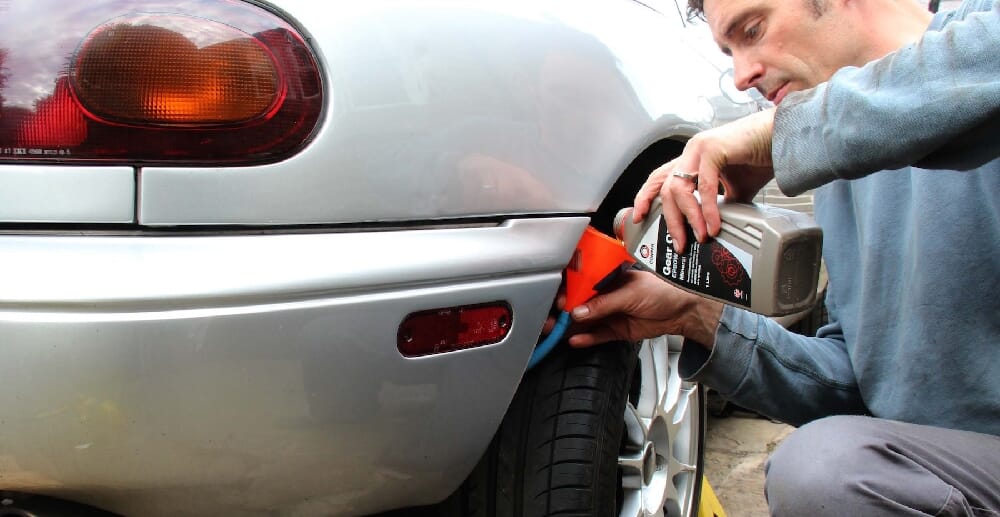
Refreshing clutch hydraulics is well within reach for a competent DIY enthusiast.
Typical process:
- Remove old master/slave cylinder
- Replace hose if required
- Refill and bleed system
Key tips:
- Use quality tools to avoid rounding fittings
- Take care when bleeding — air in the system will ruin pedal feel
- Check for leaks after installation
If you’re unsure, a professional install ensures everything is set up correctly.
When to Act: Preventative vs Reactive
Many MX‑5 owners only address clutch hydraulics when something fails, often at the worst possible moment.
A better approach is preventative:
- Refresh components on older cars (10+ years)
- Replace when upgrading clutch or gearbox
- Address early warning signs before failure
Given the relatively low cost of parts, this is one of the best value reliability upgrades available.
Small Parts, Big Impact
The clutch hydraulics system might be simple, but it plays a huge role in how your MX‑5 feels to drive. A tired system can make even a healthy gearbox feel vague and unresponsive, while a refreshed setup restores the sharp, mechanical connection the MX‑5 is famous for.
Whether you’re maintaining a classic Mk1, enjoying a weekend Mk2, daily driving an NC, or running a modern ND, keeping your clutch hydraulics in top condition ensures every gear change feels exactly as Mazda intended.
Explore clutch & gearbox parts for your MX‑5:
A simple refresh today can save you from a breakdown tomorrow, and bring back that crisp, confidence‑inspiring shift every MX‑5 deserves.
Leave your comment